How Giant Inflatable Structures Are Engineered to Withstand Outdoor Weather Conditions
Outdoor inflatable architecture has evolved far beyond simple bouncy castles and promotional balloons. Today’s giant inflatable structures are used for festivals, sporting events, advertising campaigns, emergency shelters, exhibitions, and immersive entertainment spaces. These enormous creations must do far more than look impressive — they need to remain stable, secure, and functional in unpredictable outdoor environments. From strong winds and heavy rain to UV exposure and fluctuating temperatures, weather presents a significant engineering challenge. Understanding how these structures are designed to cope with environmental stress reveals the remarkable blend of material science, structural engineering, and safety innovation behind their success.
Modern Megaflatables represent the pinnacle of inflatable design, combining creative scale with rigorous technical precision. Whether forming giant branded installations or temporary architectural spaces, these structures are carefully developed to perform safely outdoors. Their durability depends on a sophisticated balance of reinforced materials, pressure systems, anchoring solutions, and environmental analysis, ensuring they can withstand demanding weather conditions without compromising visual impact or user safety.
The Science Behind Inflatable Structural Stability
Unlike rigid buildings, inflatable structures rely on internal air pressure to maintain shape and strength. This principle, known as pneumatic engineering, creates a pressurised form capable of distributing force evenly across its surface. Engineers calculate precise air pressure requirements based on the structure’s size, shape, and intended environment.
Internal Pressure and Shape Retention
Constant airflow systems or sealed pressure chambers help maintain structural integrity. For large outdoor inflatables, continuous blower systems are often preferred because they compensate for small punctures or pressure fluctuations. Sensors may also monitor pressure levels to ensure consistent performance.
Key factors influencing stability include:
- Air pressure balance across all chambers
- Shape geometry to reduce wind resistance
- Reinforced seam construction
- Flexible load distribution
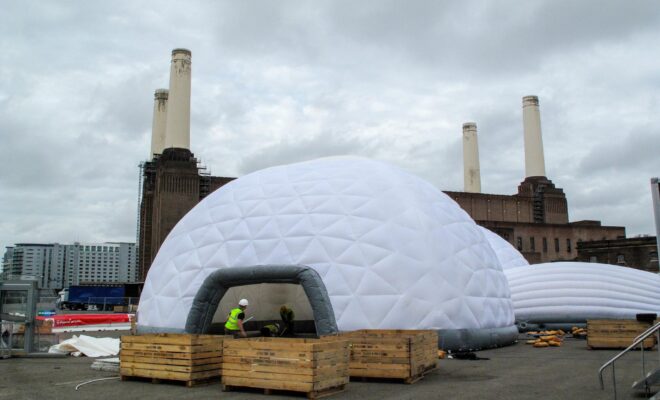
A dome or curved design often performs better outdoors because aerodynamic forms minimise wind drag compared to flat-sided structures.
Advanced Materials Designed for Harsh Weather
The materials used in giant inflatables are a critical defence against weather exposure. Standard fabrics are insufficient for large-scale outdoor installations, so manufacturers use specialised textiles engineered for resilience.
Common High-Performance Materials
Most professional-grade inflatables are constructed from:
- PVC-coated polyester
- Vinyl composites
- TPU (thermoplastic polyurethane)
- UV-resistant laminated fabrics
These materials offer waterproofing, tear resistance, and protection from prolonged sun exposure. UV coatings are especially important, as sunlight can degrade fabric strength over time. Fire-retardant treatments are also often integrated to meet public safety regulations.
By using industrial-grade textiles, Megaflatables can endure repeated outdoor deployment while resisting rain saturation, fading, and structural fatigue.
Wind Load Engineering: The Biggest Outdoor Challenge
Wind is the primary threat to giant inflatable structures. Sudden gusts can create uplift, lateral force, or instability if the structure is not properly designed.
Wind Tunnel Testing and Simulation
Before deployment, many large inflatables undergo digital modelling and wind load analysis. Engineers use computational fluid dynamics (CFD) software to simulate real-world weather scenarios. This testing identifies pressure points, drag zones, and potential failure risks.
Strategies to Improve Wind Resistance
To combat strong winds, engineers implement:
- Multi-point anchoring systems
- Ballast weighting
- Ground stakes or tether cables
- Air vent systems to release excess pressure
- Low-centre-of-gravity design
These systems ensure the inflatable remains grounded and balanced, even in moderate to challenging weather.
Anchoring Systems: Securing Giants to the Ground
No matter how advanced the material or shape, proper anchoring is essential. Inflatable engineers select anchoring methods based on terrain type, event duration, and forecast conditions.
Common Anchoring Methods
For Soft Ground:
- Heavy-duty stakes driven deep into the earth
- Reinforced guy ropes
For Hard Surfaces:
- Concrete ballast blocks
- Water weights
- Steel plate anchors
The anchoring network is typically calculated to withstand forces exceeding expected wind loads, creating a safety margin that protects both the structure and nearby visitors.
Waterproofing and Rain Management
Rain introduces two major concerns: water pooling and surface degradation. If rainwater accumulates on certain inflatable surfaces, it can increase weight and create dangerous sagging.
Drainage-Focused Design
To prevent pooling, designers incorporate:
- Sloped surfaces
- Curved rooflines
- Water-shedding seams
- Rapid drainage channels
Waterproof coatings also stop moisture penetration, preserving internal pressure and preventing mould or material weakening.
Temperature and UV Exposure Considerations
Outdoor events often involve prolonged sun exposure, which can affect both air pressure and material lifespan. Heat causes internal air expansion, while cold weather may reduce pressure.
Climate Adaptation Features
Engineers account for temperature shifts by including:
- Automatic pressure regulation systems
- Heat-reflective outer coatings
- UV stabilisers
- Flexible expansion zones
These features ensure structural consistency across varying climates, from summer festivals to winter promotional events.
Safety Standards and Compliance
Large inflatable structures used in public spaces must comply with strict safety regulations. In the UK and Europe, inflatable installations often follow standards relating to structural integrity, flame resistance, and operational procedures.
Essential Safety Protocols
Operators typically implement:
- Daily weather monitoring
- Maximum wind speed thresholds
- Emergency deflation plans
- Routine seam inspections
- Backup power supplies for blower systems
This combination of engineering and operational planning significantly reduces risk during outdoor use.
Maintenance: Long-Term Weather Resistance
Even the strongest inflatable requires regular maintenance to remain weather-ready. Outdoor exposure gradually affects seams, coatings, and pressure systems.
Best Maintenance Practices
- Inspect for seam wear after each use
- Clean surfaces to remove debris and pollutants
- Store in dry, temperature-controlled conditions
- Test blowers and pressure sensors regularly
- Repair minor punctures immediately
Consistent upkeep extends lifespan and ensures safe future deployment.
Innovation in Giant Inflatable Engineering
Advancements in inflatable technology continue to improve weather resistance. Smart sensors, lightweight composites, and automated environmental response systems are redefining what these structures can achieve.
Future developments may include self-adjusting pressure systems, AI-powered weather adaptation, and biodegradable performance fabrics. These innovations will allow inflatable architecture to become even safer, more sustainable, and more versatile for outdoor applications.
Conclusion
Giant inflatable structures are remarkable examples of modern engineering, blending creativity with advanced safety design. Their ability to withstand wind, rain, sunlight, and temperature fluctuations depends on specialist materials, aerodynamic planning, robust anchoring, and ongoing maintenance. From public events to architectural installations, these structures showcase how innovation can transform air-filled forms into dependable outdoor solutions. As technology advances, inflatable engineering will continue to push boundaries, delivering larger, safer, and more resilient designs for diverse environments.